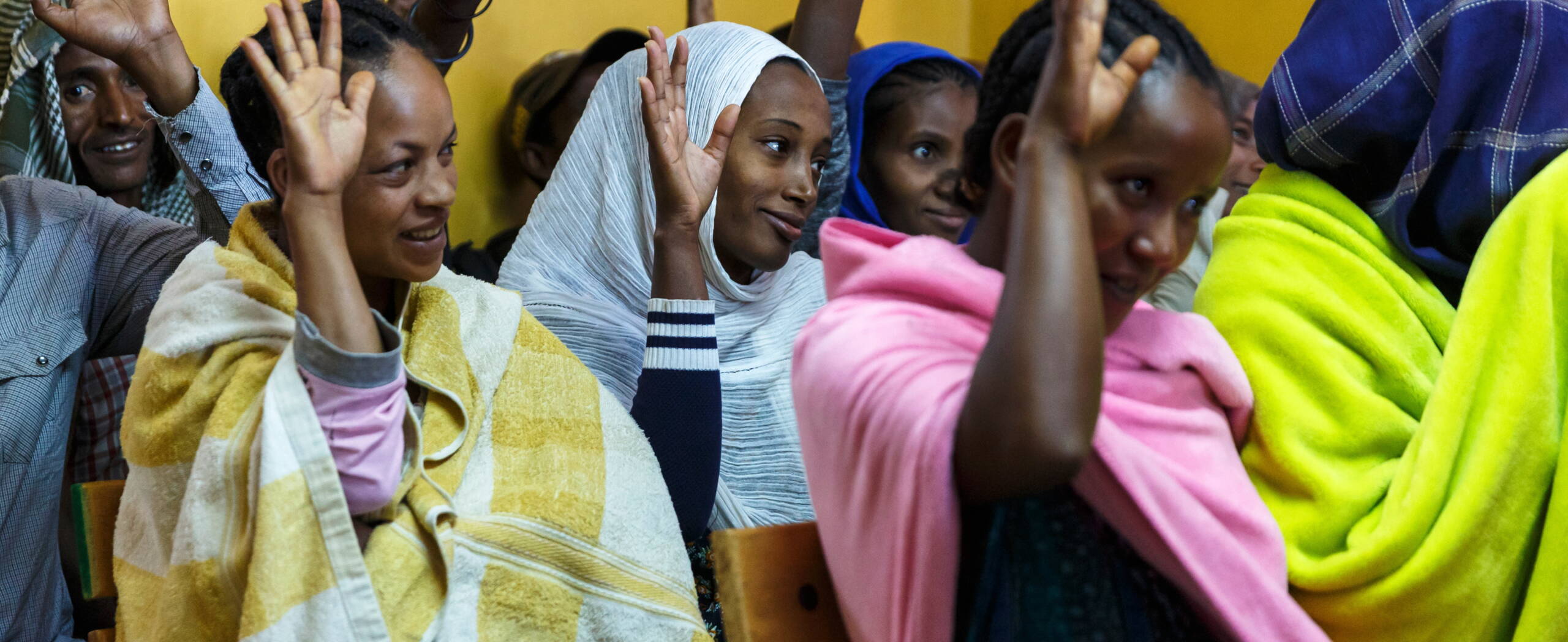
Women raise their hands during a discussion.
Women in the maternity waiting home for high-risk pregnancies, Ethiopia.
© Hanspeter Bärtschi/WHI

Every two minutes, a woman dies in connection with pregnancy or childbirth somewhere in the world, according to UNICEF. 95% of these deaths occur in low-income countries. Most could be prevented if women and their babies had access to professional care. This is where our work comes in.


Our partner countries

We choose to work in fragile, crisis-stricken countries. In all our partner countries, maternal mortality rates are alarmingly high – and our involvement there saves lives.


Our partners

Local people know best what the challenges are – and what sustainable solutions look like. That’s why we collaborate with local partner organisations in all our projects.


Our conviction

Our projects specifically equip women to take control of their choices – be it in relation to pregnancy and childbirth or in their social environment. Because when women are empowered, it strengthens both society and the economy.


Our structure

Our communication is direct and streamlined, and our financial flows are transparent. This ensures that 100% of every donation is used purposefully and effectively.

mother and child, Bangladesh.
Mother and child, Bangladesh.
© LAMB

Our work

Maternal mortality in a society is directly linked to the rights enjoyed by girls and women there. When girls are married off young, for example, they often become pregnant early too, even though their bodies are not yet ready for pregnancy. This increases the risk of dying during childbirth or suffering long-term physical and psychological harm. That’s why we employ a range of measures to empower girls and women in both their health and their rights.
 

Our activities can be categorised into three main areas:

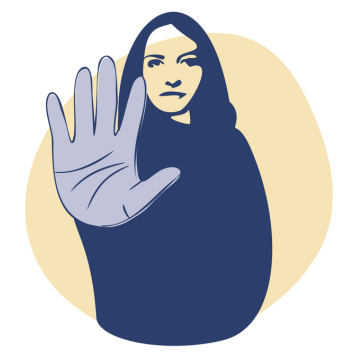
Illustration: A woman shields herself with her hand.

Eliminating gender-based violence

  • We combat child marriage and campaign against the practice of female genital cutting, which is a severe violation of human rights.

  • We support survivors of gender-based violence.

Illustration: Stethoscope.

Strengthening local health systems

  • We invest in training healthcare workers, in particular midwives.

  • We build maternity wards and support local health centres.

  • We subsidise maternity waiting homes for women with high-risk pregnancies.

Illustration: A hand reaching for a surgical instrument.

Access to specialist treatment and the prevention of birth injuries

  • We run awareness campaigns on the topic of obstetric fistulas.

  • We enable women with obstetric injuries to undergo surgery and support their reintegration into family and community life.

A conversation between a local project staff member and women in eastern Chad.
Project staff interview women in Chad.
© Salomon Djekorgee Dainyoo/WHI/Fairpicture

Our approach

Only when all people participate equally in political, economic and social life can societies be stable and peaceful. No country in the world has yet achieved true equality – even though all agree it is a basic human right.

Project collaborations

Through our work, we strive to make equal rights and equal access to resources – especially medical resources – a reality for all.  To achieve this goal, women must be strengthened as knowledge-bearers and decision-makers. We develop our projects together with local communities and our partner organisations, implement them jointly, and evaluate them using a participatory approach.

It is the women and all members of the population in our partner countries who know best what the needs are and what sustainable solutions might look like.

Mutual learning

In close cooperation with local partners, we promote knowledge exchange and collaborative learning, and strengthen interactions between local communities and health services. Our goal is for local communities to implement these measures independently in the long term. A high priority for us is to strengthen smaller civil-society initiatives and support them in building local capacity.

Our work contributes to UN Sustainable Development Goals 3 (Health and Well-being) and 5 (Gender Equality).

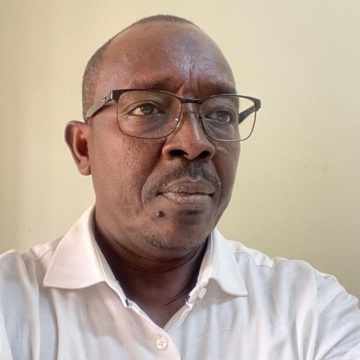
Dahab Manoufi

«By working with local communities, we build mutual trust. That takes time and demands flexibility. So the fact that Women’s Hope is prepared to enter into a long-term partnership with us is invaluable.»

Dahab Manoufi, Director of the partner organisation ‘Bureau d’Appui Santé et Environnement’ in Chad

Sustainable development and targeted humanitarian aid

Our primary focus is on development assistance – with the goal of achieving long-term, sustainable change. In fragile regions affected by recurring crises, conflicts or natural disasters, we apply what is called the nexus approach. This combines humanitarian aid with development assistance, so that short-term emergency relief goes hand in hand with a long-term commitment.
 

This means: when acute crises arise, we respond swiftly with targeted humanitarian aid – without losing sight of the longer-term impact. Our existing presence on the ground and the experience of our partner organisations allow us to respond flexibly to new challenges while also strengthening permanent structures.
 

For example, we provide emergency medical care for women and girls in flood-affected areas in Bangladesh. We also support Sudanese refugees in eastern Chad, with particular attention to pregnant and breastfeeding mothers. In this way, we are able to save lives in the short term – and improve living conditions in the long term.

Our Mission Statement makes clear what drives us – and what we pour heart and soul into day after day.

Partnerships with local actors are essential for effective and equitable international cooperation. At the same time, partnerships are shaped by power imbalances rooted in historically oppressive structures. Recognising this tension is crucial to our ongoing development as an organisation.
 

That is why we – together with more than forty other Swiss non-governmental organisations – have signed a manifesto that provides us with practical principles for our work.

Anyone who reports on others carries a responsibility. That’s why we follow the ‘Manifesto for Responsible Communication in International Cooperation’, which the organisation Alliance Sud drafted in collaboration with its members.

Trust is our foundation – which is why we have our work Zewo-certified and audited for transparency, effectiveness and diligence in how we handle donations.

Zewo Certification

Learn more about the work we do in our Annual Reports and about our finances in the Annual Financial Statement.

A smiling woman from Ethiopia is carrying something on her back.
Empowered girls, Ethiopia.
© Hanspeter Bärtschi/WHI
Support uS!

Donate now for empowered women – protected lives

Notsituation im Bangladesch
Prekäre Lage in fdsfs für Frauen und Kinder