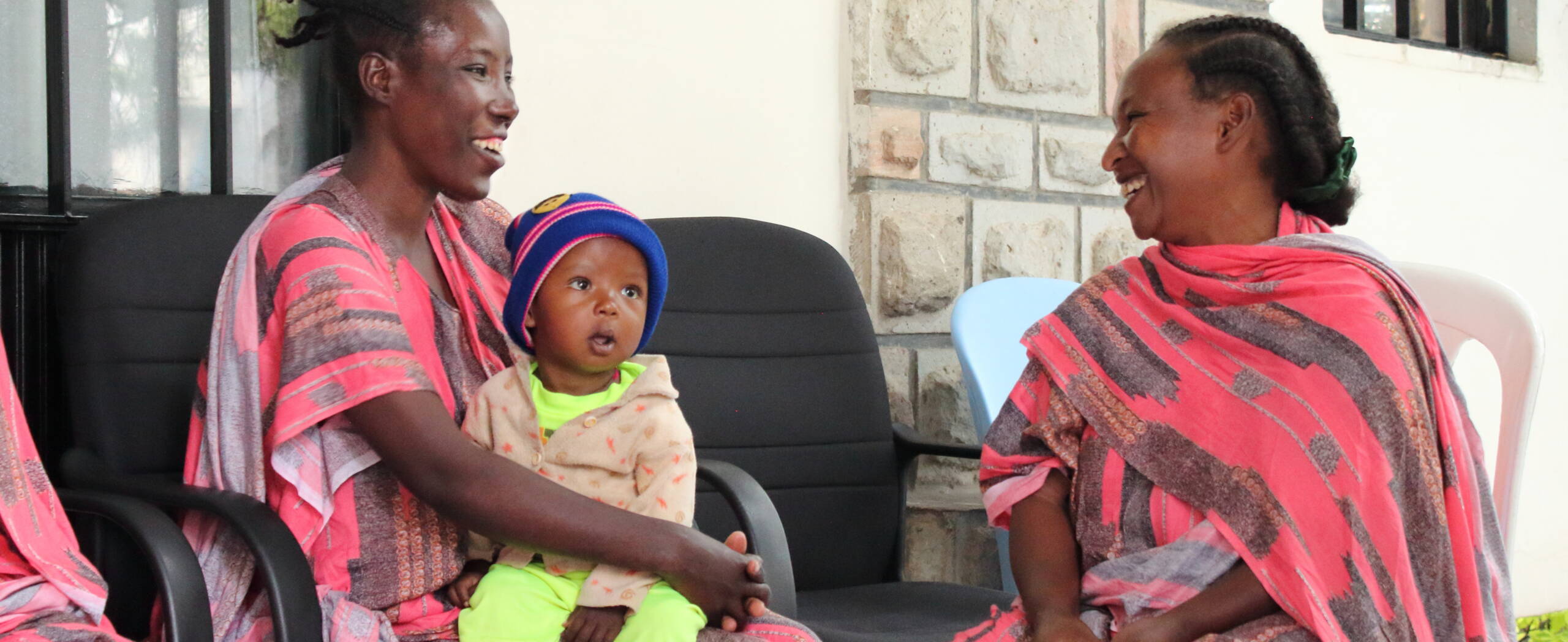
The figures tell a stark story: only one in three women with an obstetric fistula in Ethiopia receives the medical care she urgently needs. This means that two out of three women are left to suffer alone – without treatment or hope.
Finding women affected by the condition is difficult. Many people are unaware of the symptoms of obstetric fistula, and the women themselves often live in isolation and poverty because of their incontinence and pain.
Once again, Workenesh was fortunate despite her ordeal. Doctors recognised her condition and operated on her successfully. She subsequently attended a training course and became an ambassador for obstetric fistula awareness. Today, she speaks to people in her community about obstetric fistulas and the importance of antenatal care. This helps ensure that complications are detected early and that families can set aside money in good time for treatment and travel to medical facilities.
Drawing on her own experience, Workenesh is able to build trust with other women. Her commitment does more than provide vital prevention work: it also helps her regain the self-confidence and social recognition she had lost along the way. Today, she says: “This work makes me happy.”