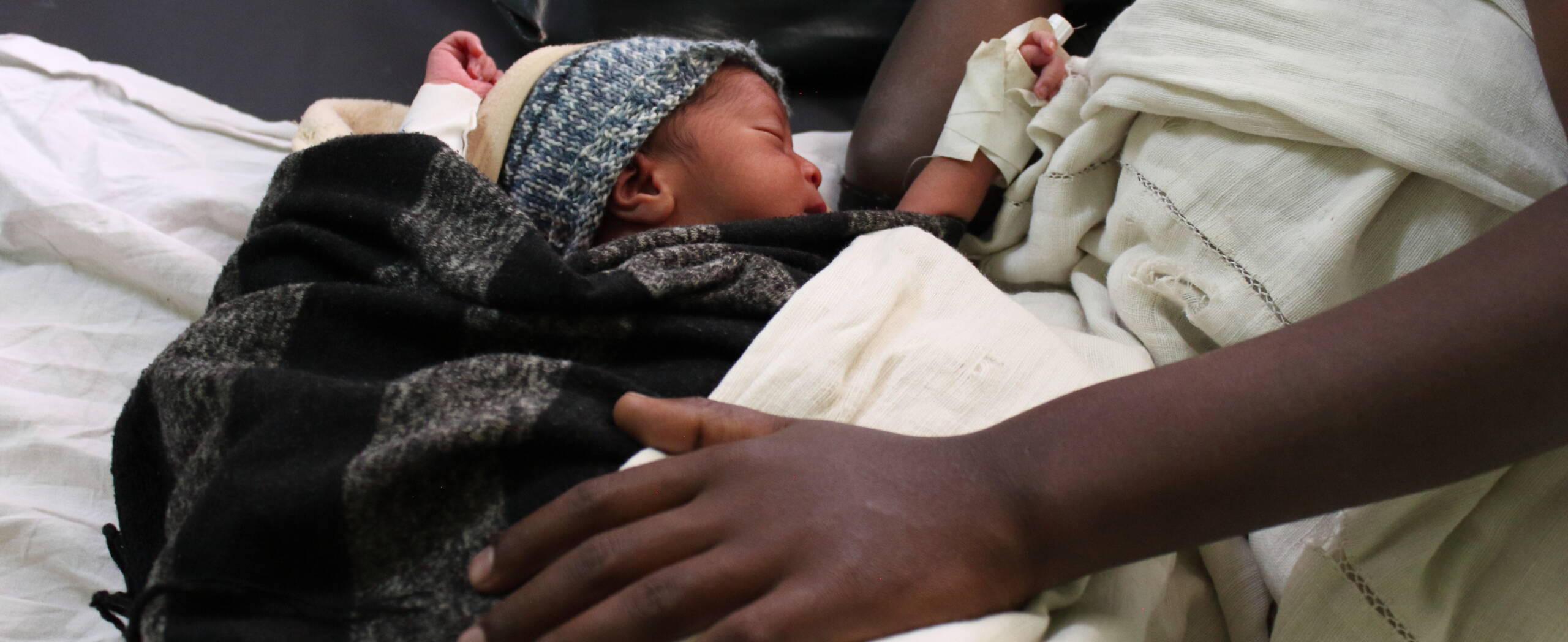
A mother’s protective hand rests on her newborn baby in one of our partner hospitals
A newborn baby in one of our partner hospitals.
© Selina Leu/WHI

Last week, the RSF militia carried out a massacre of civilians in the Sudanese city of El Fasher. Among those killed were pregnant women, children and medical staff.

Published 4 November 2025

Please note: To use our resources as efficiently as possible, we used AI-based tools to support the translation of this page. Despite careful review, the translation may contain occasional errors or inaccuracies. Thank you for your understanding.

Last week, the RSF militia perpetrated an unimaginable massacre of civilians in the Sudanese city of El Fasher. Researchers at Yale University analysed satellite images and reported: “We have never seen such intense reddish discolouration of the ground – traces that point to blood.”
 

Particularly horrific is the fact that militia members killed 460 people in a maternity hospital, including women in the final stages of pregnancy, mothers with newborns, family members and medical staff.
 

We are devastated by this boundless violence. Devastated by the international community’s hesitant response. Devastated by the loss of so many innocent lives.
 

Yet this catastrophe was foreseeable. The RSF has been besieging El Fasher for 18 months. Experts describe a deliberate strategy: first, the population is systematically starved. Then the militia enters the city and goes from door to door, shooting people.

Illustration of a megaphone with a speech bubble and an exclamation mark.

«The pace and scale of the killings are so high that, by next week, more people may have been killed than in Gaza over two years.»

Nathaniel Raymond of Yale University, speaking to Swiss public broadcaster SRF

Thousands of people remain trapped in the city. What is urgently needed are safe escape routes for civilians, humanitarian aid for those trapped, pressure on countries supplying weapons – and, above all, an immediate end to the fighting between the Sudanese army and the RSF militia.
 

Yet the international community is struggling to formulate a response.
 

We feel helpless – but we are taking action. In neighbouring Chad, which borders Sudan, we support women who have fled the conflict zone. They receive medical and psychological care, as well as emergency kits containing food and hygiene supplies.
 

What began as short-term emergency assistance has become an ongoing commitment. Because as long as the world remains silent, the suffering continues.


For more information about the situation in the country, listen to the SRF report.

Notsituation im Bangladesch
Prekäre Lage in fdsfs für Frauen und Kinder