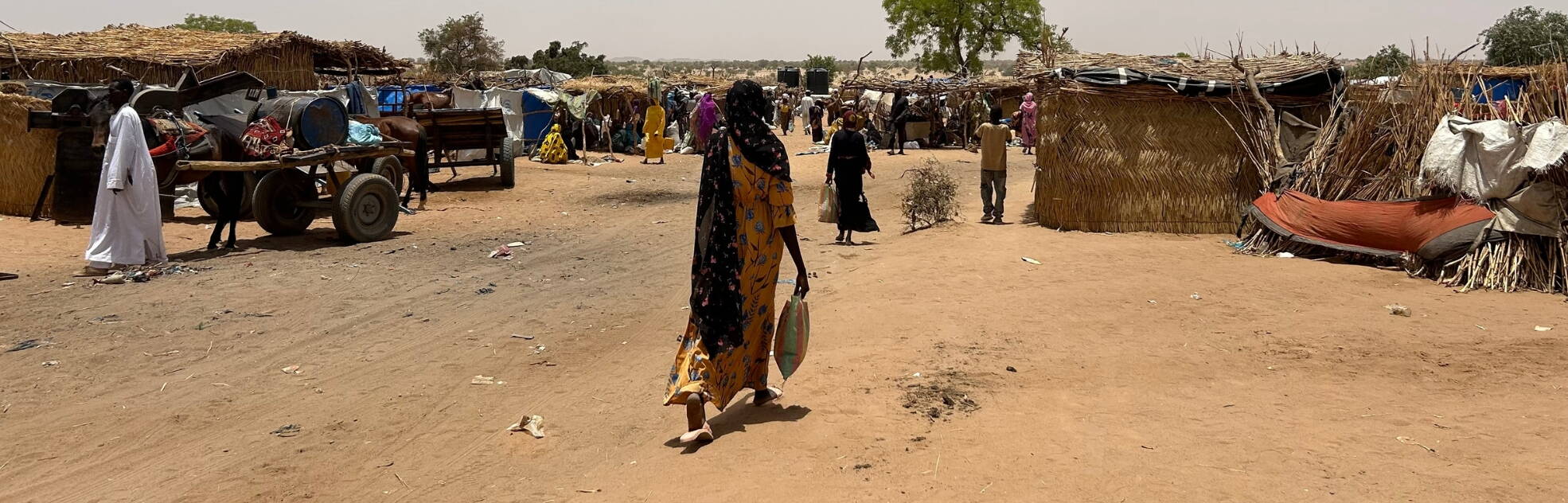
Frau vor einem Flüchtlingslager im Tschad.
Woman in front of a refugee camp, Chad.
© Laora Vigourt/MSF

The ongoing civil war in Sudan has displaced more than ten million people, many of whom have fled to neighbouring Chad. In response to the escalating humanitarian crisis, we are expanding our work in the east of the country. Our aim is to provide medical support, particularly to pregnant women and children under the age of five.

Published 17 September 2024

Please note: To use our resources as efficiently as possible, we used AI-based tools to support the translation of this page. Despite careful review, the translation may contain occasional errors or inaccuracies. Thank you for your understanding.

The civil war in Sudan has plunged an entire region into a major humanitarian crisis – one that receives little attention on the international political and media stage, let alone sufficient financial support. Yet funding is desperately needed. People forced to flee their homes lack food, clean water, shelter and access to medical care.
 

The situation in Chad, one of the world’s poorest countries, is particularly alarming. Of the approximately 600,000 refugees the country has taken in since the outbreak of war in spring 2023, nearly 90 per cent are women and children, making them particularly vulnerable. Yet the United Nations has sufficient funding to cover barely a quarter of the humanitarian needs.

Frauen erhalten Hygiene-Kits im Flüchltingslager im Tschad.
Verteilung Hygiene-Kits.
© WHI

We have been working in the affected region of eastern Chad for five years. Together with our local partner organisation, Bureau d'Appui Santé et Environnement (BASE), we support 14 health centres to improve healthcare for pregnant women, mothers and children. In recent months, some of these centres have been overwhelmed by the growing demand.
 

We are now expanding our work. Around two makeshift refugee camps in the province of Ouaddaï, we are investing in local healthcare infrastructure. This includes expanding a maternity ward and equipping it with solar panels. We are also hiring an additional midwife and helping to ensure free healthcare for pregnant women and children under the age of five. These emergency measures aim to support both refugees and the local host communities, helping to ease the impact of the crisis on everyone affected.


Notsituation im Bangladesch
Prekäre Lage in fdsfs für Frauen und Kinder