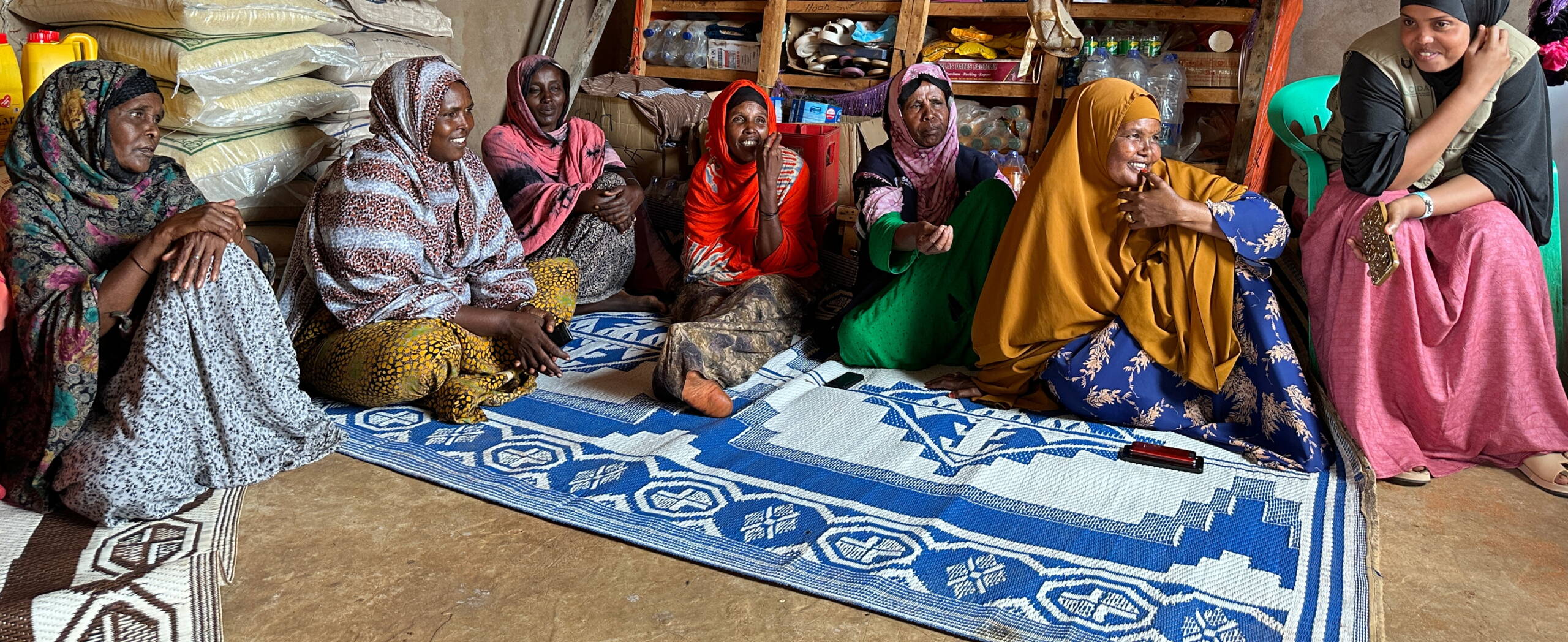
Women are sitting on the floor and talking.
Exchange on maternal health, Ethiopia.
© Noemi Grossen/WHI

In Ethiopia’s Somali Region, an alarmingly high number of mothers and babies die during childbirth. Together with our long-standing partner and local communities, we are working to sustainably strengthen healthcare services – while also promoting the lasting elimination of female genital cutting.


Local partner

OWDA (Organisation for Welfare and Development in Action) works to improve living conditions for local communities in the Somali Region of Ethiopia.


Objectives

Pregnant women, mothers and newborns in the Somali Region have access to high-quality healthcare, and female genital cutting is fully eliminated in the project area.


Activities

Strengthening the healthcare system, improving access to health services for women and newborns, and supporting local initiatives to combat female genital cutting.


Participants

Almost 33,000 people benefit directly from improved healthcare services and the elimination of female genital cutting or participate in project activities. A further 39,000 are indirectly involved.

The rural Somali Region in eastern Ethiopia is severely underserved. The region falls below the Ethiopian average across all key indicators, but healthcare provision is particularly precarious: there is a lack of infrastructure, staff and medicines. Maternal and infant mortality rates even worsened in recent years.
 

The already weak healthcare system is under additional pressure due to the large number of displaced people. Climate change is placing an additional burden on local communities.
 

Despite being legally prohibited, female genital cutting is almost universal in the region, with most women subjected to the most severe form. As a consequence, women suffer serious, lifelong consequences. In addition to chronic physical and psychological health problems, this human rights violation contributes to the high maternal and infant mortality rates.

Title: Healthy Mothers, Self-Determined Bodies: Communities Driving Change
Local partner: Organisation for Welfare and Development in Action (OWDA) 
Project region: Doolo Zone, part of Ethiopia’s Somali Region in the east of the country
Duration: January 2026 to December 2028 (follow-up project)
Intervention areas:
Strengthening the healthcare system / Eliminating gender-based violence

Sustainable improvements in maternal and newborn health, as well as the elimination of female genital cutting, can only be achieved with the trust and active involvement of local communities. This is why we have been working with OWDA in the project region since 2019. Our partner is deeply rooted in the communities and has established strong, trusting relationships. We can also build on the experience gained during previous project phases.

Rusty beds and a treatment table stand in a room with dirty walls.
A health post in the Somali region, which we are renovating as part of the project.
© Noemi Grossen/WHI

What we do

We improve women’s and newborns’ access to high-quality healthcare services by strengthening local groups that raise awareness in their communities about maternal and child health and the importance of good antenatal care. Through income-generating activities supported by the project, these groups raise funds to maintain and improve local healthcare infrastructure. Mobile teams also provide care to mothers and children in remote areas.
 

We promote the quality of local healthcare services by training healthcare professionals to provide safe care during childbirth, identify complications at an early stage and respond appropriately in emergencies. Standardised referral protocols and clear procedures strengthen coordination between healthcare facilities. We are also equipping 15 health centres with essential equipment and life-saving medicines and ensuring access to water at all centres. Two health centres will undergo comprehensive renovations, while another will be expanded to include a newborn care unit.
 

We strengthen local action against female genital cutting by engaging religious and traditional leaders as well as former practitioners of the practice as key advocates for change. Awareness-raising on the health, social and legal consequences help to promote lasting change. Finally, we train healthcare professionals in prevention and in providing sensitive and respectful care to those affected.

Female genital mutilation is commonly referred to by the abbreviation FGM. The term emphasises the harmful nature of the practice and is frequently used in human rights and healthcare contexts.
 

FGC (Female Genital Cutting) is considered a more culturally sensitive term and is often preferred when engaging with affected communities. We primarily use the term FGC in our work out of respect for the women we work with, who do not see themselves as mutilated but as having undergone cutting.


Both terms describe the same practice, which is internationally recognised as a human rights violation.

Sustainability

A key feature of the project is the strong involvement and mobilisation of local communities. New community-led income-generating activities enable communities to invest in healthcare infrastructure. Knowledge about maternal and child health and the harmful consequences of female genital cutting will remain rooted in the communities even after the project ends. Capacity-building also strengthens local institutions, enabling communities to independently maintain and further develop healthcare services in the future.

Logo SDC

We would like to thank all our funding partners – including those not mentioned here – for making this project possible. 

Support us!

Donate now for empowered women – protected lives

Notsituation im Bangladesch
Prekäre Lage in fdsfs für Frauen und Kinder