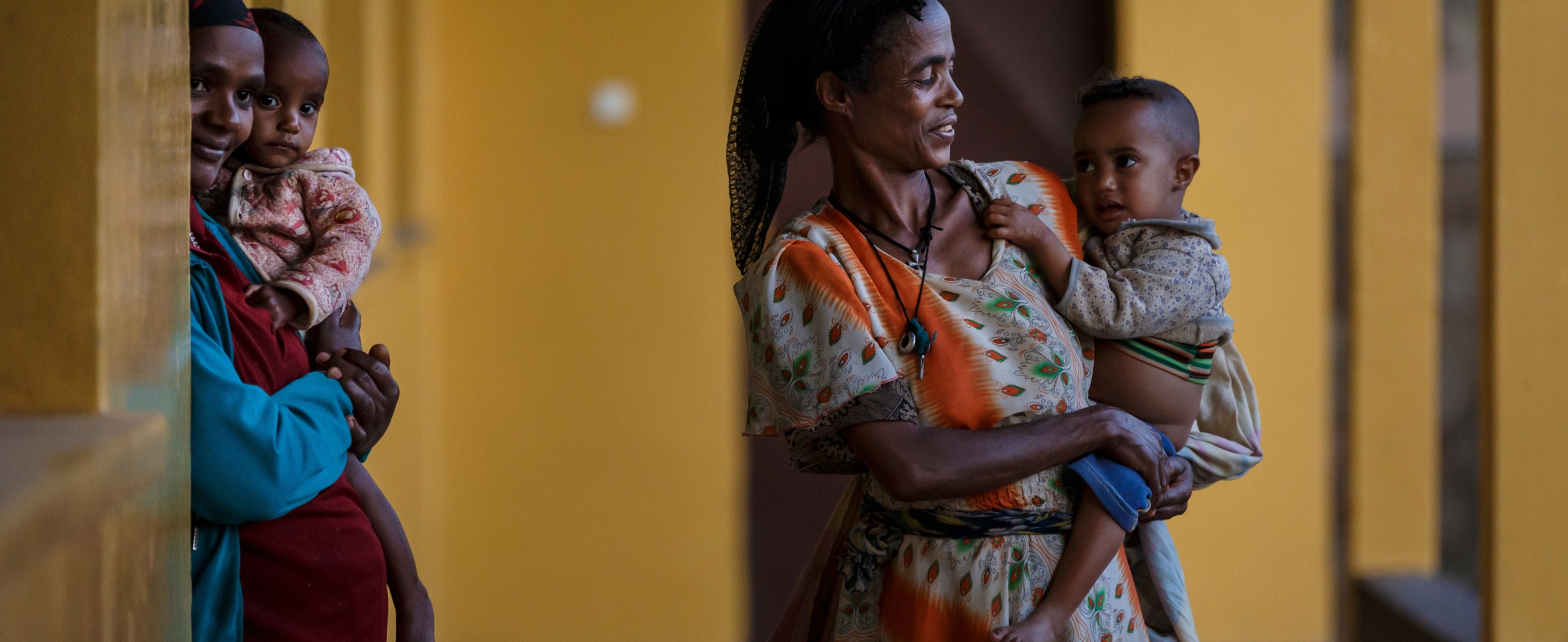
Two women holding children in their arms are standing in a corridor.
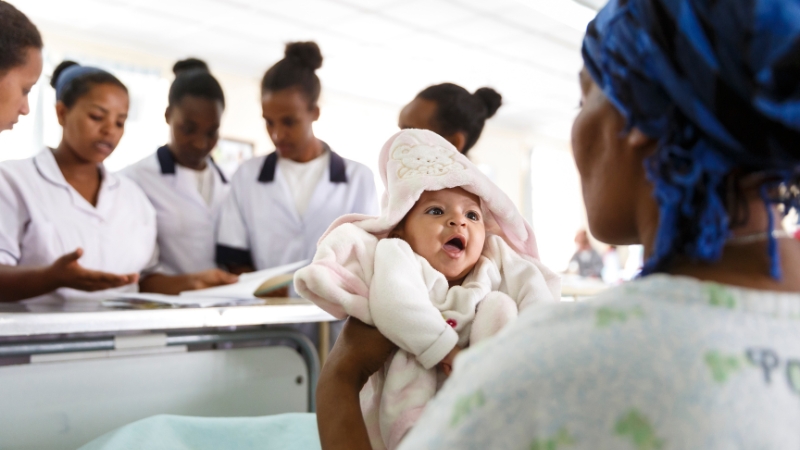
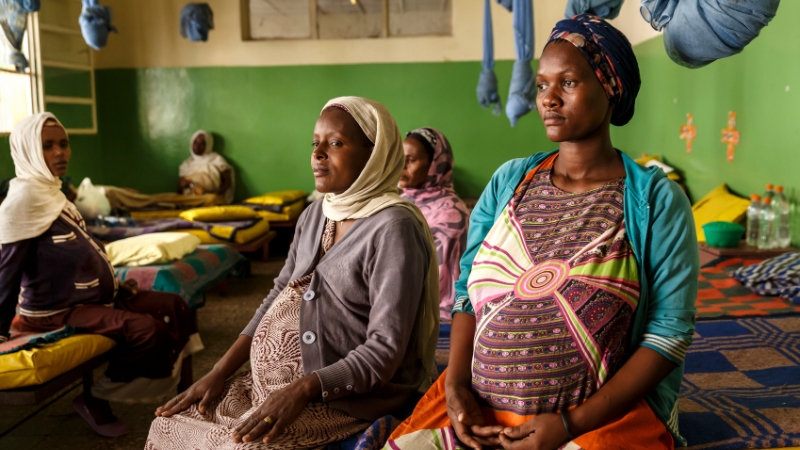
Women in the maternity waiting home for high-risk pregnancies at Attat Hospital.
© Hanspeter Bärtschi/WHI

Women in Ethiopia find themselves in a precarious legal situation with uncertain access to health care. Female genital cutting and child marriage are widespread. Armed conflicts and natural disasters further exacerbate the situation. That is why we take a comprehensive approach to strengthening the health and rights of girls and women.
Ethiopia in numbers

The country ranks near the bottom of the Human Development Index and in the lower half of the Gender Equality Index (180th and 131st, respectively). With several million people displaced within its borders, Ethiopia has one of the largest displaced populations in the world.


Healthcare

Many women lack access to qualified obstetric care; and the maternal mortality rate is almost 40 times higher than in Switzerland. Nationwide, there is just one doctor for every 10,000 people.


Biggest challenges

Many girls and women have limited access to health services, particularly maternal and reproductive care. This contributes to high rates of birth injuries. Early marriage, female genital cutting and a lack of education amplify the risks.


Our work

We have been engaged in Ethiopia since 2004, with a comprehensive range of projects focused on strengthening the sexual and reproductive health and rights of women and girls.

Any questions?

We look forward to hearing from you.

Portrait Sandra Ege

Sandra Ege

Programme Manager, Ethiopia

Portrait Rahel Gebremariam

Rahel Gebremariam

Country Director, Ethiopia

An older woman smiles confidently at the camera.
Woman at market, Ethiopia.
© Hanspeter Bärtschi/WHI
Support us!

Donate now for empowered women – protected lives

Notsituation im Bangladesch
Prekäre Lage in fdsfs für Frauen und Kinder