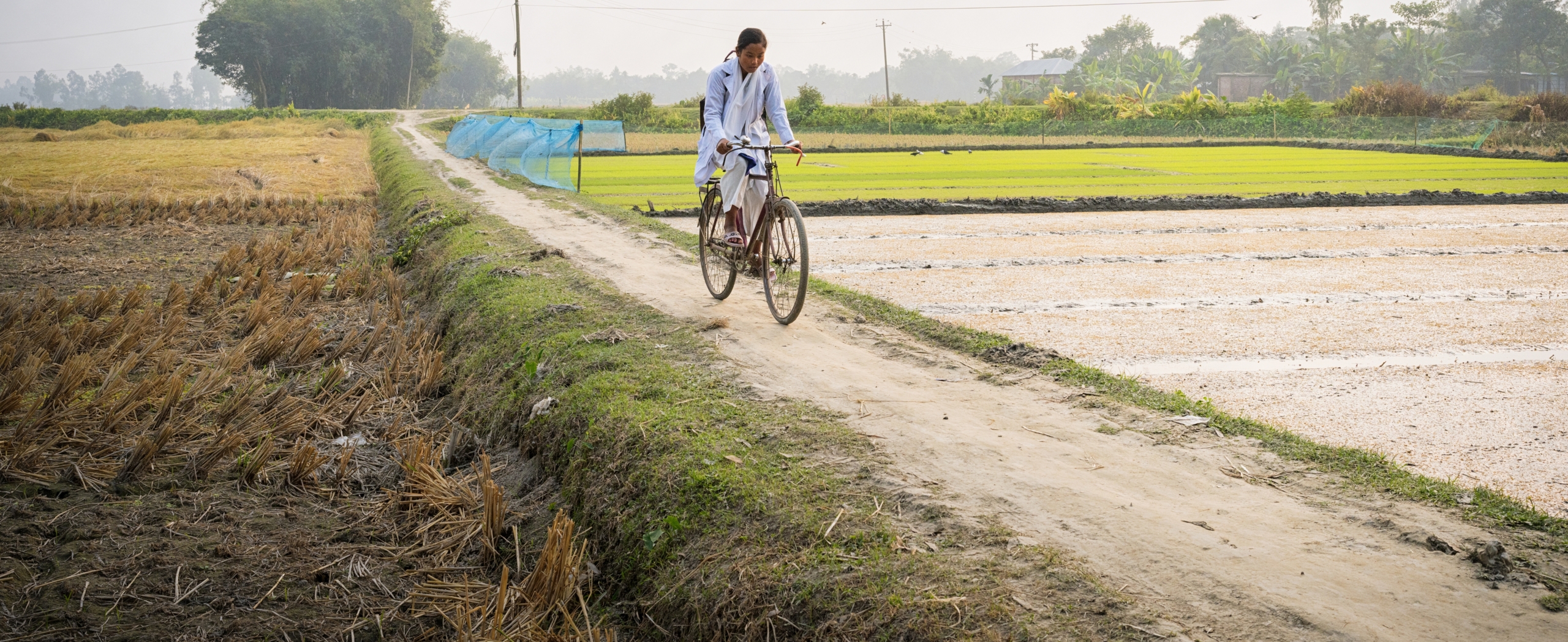
A girl is riding her bike along a levee on her way to school.
On the way to school: Girls in Bangladesh.
© Fabeha Monir/WHI

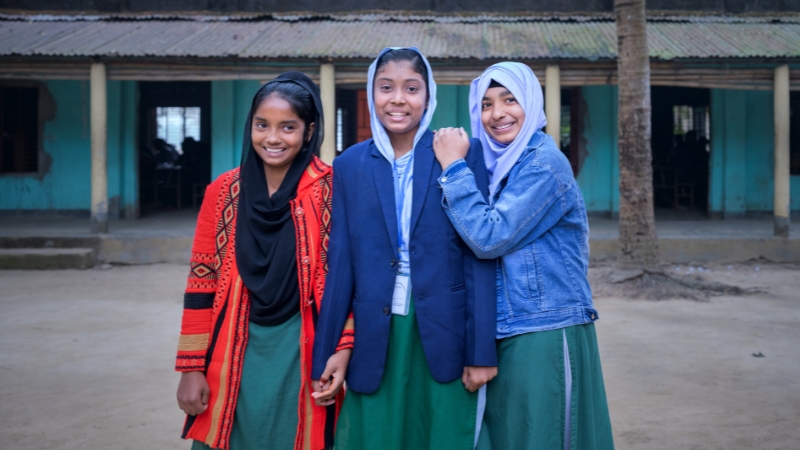
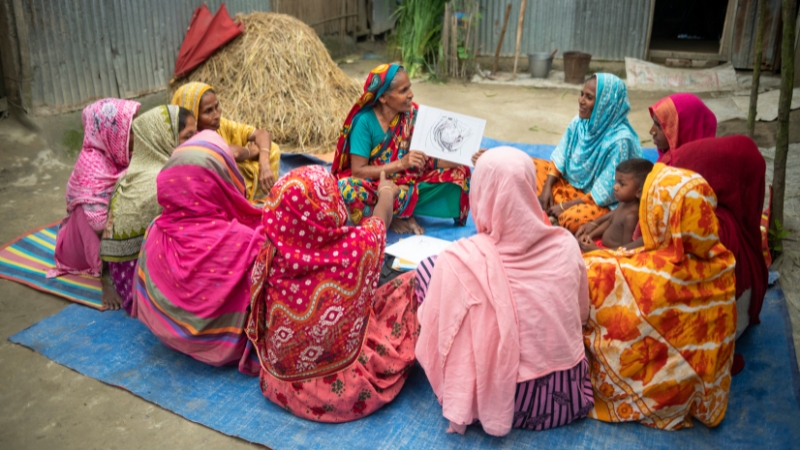
In Bangladesh, girls and women are particularly vulnerable: many are married off at an early age and have very limited access to education and healthcare. Teenage pregnancies are common and can have life-threatening consequences. That is why are committed to strengthen women’s self-determination and improve access to health services.
Bangladesh in numbers

The country ranks in the lower-middle range of both the Human Development Index and the Gender Inequality Index (131st and 125th out of 193 countries, respectively). With around 1,350 people per square kilometre, it is one of the most densely populated countries in the world.


Healthcare

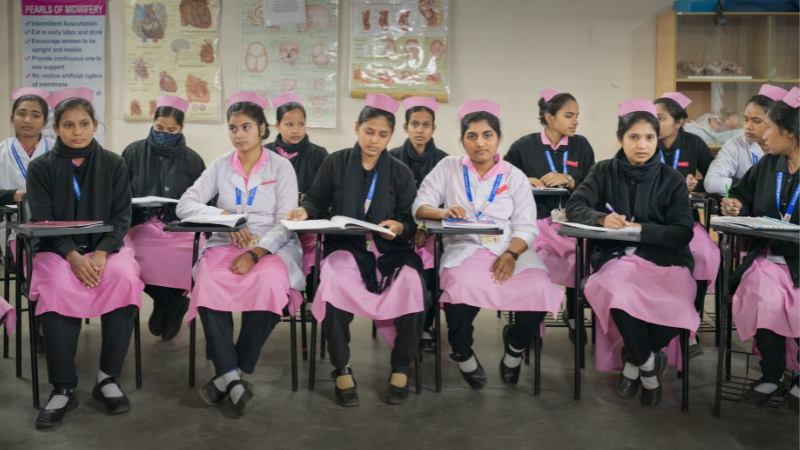
Rural areas in particular suffer from a weak healthcare infrastructure. As a nationwide average, there are just seven doctors for every 10,000 people. Maternal mortality is 23 times higher than in Switzerland.


Biggest challenges

Bangladesh is characterised by extreme social inequality. In rural areas in particular, many people live in poverty, limiting their access to health services and leading families to marry their children off at an early age. 


Our work

We have been active in Bangladesh since 2011. Today, we support four projects focused on reducing maternal mortality, preventing child marriage, and preventing and treating birth injuries.

Any questions?

We look forward to hearing from you.

Portrait Fabienne Moosmann

Fabienne Moosmann

Programme Manager, Bangladesh

A girl smiles shyly at the camera.
Mosammat from Bangladesh campaigns against child marriage.
© Fabeha Monir/WHI
Support us!

Donate now for empowered women – protected lives

Notsituation im Bangladesch
Prekäre Lage in fdsfs für Frauen und Kinder