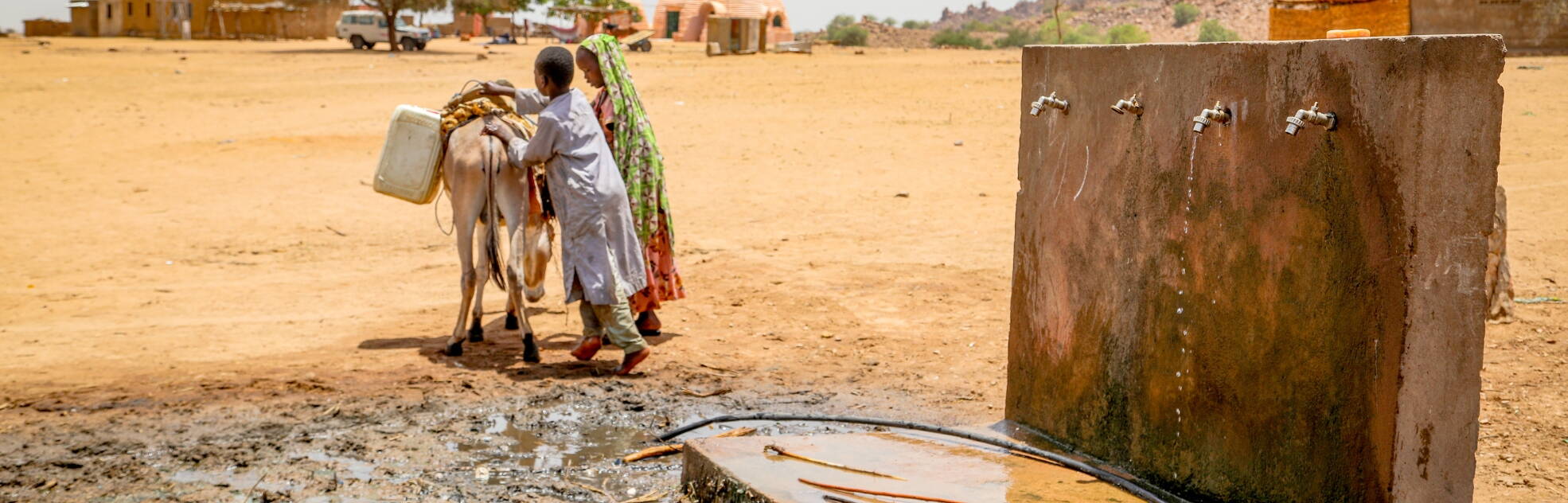
Kinder transportieren Wasser von einer Wasserstelle im Tschad
Water point in Hougouné, Chad.
© Salomon Djekorgee Dainyoo/WHI/Fairpicture

Health centres are few and far between in eastern Chad. And many lack even the most basic facilities – including access to water. Ahmat Malick, a doctor and programme coordinator for our local partner organisation, BASE, knows all too well what this means for mothers, babies and midwives.

Published 11 August 2025

Please note: To use our resources as efficiently as possible, we used AI-based tools to support the translation of this page. Despite careful review, the translation may contain occasional errors or inaccuracies. Thank you for your understanding.
Ahmat, you oversee work at 14 health centres in eastern Chad. What have you experienced when there is no water available during childbirth? 
It is an enormous strain. For the midwives, but above all for the women. Without clean water, we cannot wash our hands, clean surfaces or maintain proper hygiene. This increases the risk of infection for both mother and child. Family members often have to bring water themselves or fetch it from far away. Sometimes, even rainwater is used, despite being completely unclean. All of this takes time – and in maternity care, time can mean the difference between life and death.

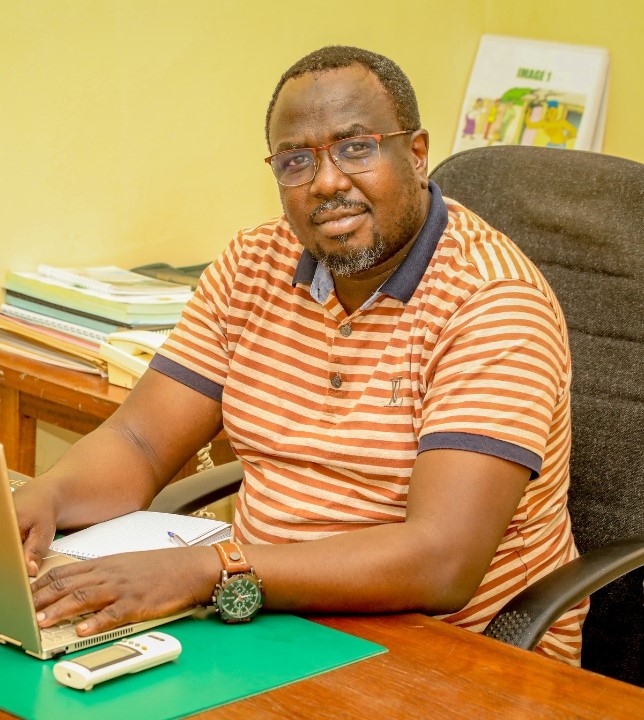
Ahmat Malick, Programmkoordinator von BASE, in seinem Büro.

«Without clean water, we cannot wash our hands, clean surfaces or maintain proper hygiene. This increases the risk of infection for both mother and child.»

Ahmat Malick, doctor and programme coordinator at BASE

How many of the 14 health centres you support have access to water?
Nine of the centres now have running water. Eight of them have been equipped with a water source through our project.

You recently built new infrastructure in Marfa and Abougoudam. What has changed as a result?
A great deal. The water station in Marfa was recently completed. In Abougoudam, we have expanded the maternity ward and installed a water supply. The centre can now safely and hygienically attend to three or four births at the same time. Investments like these make an enormous difference.
 

Hebamme Zara Daoud wäscht die Hände vor einer Schwangerschaftsuntersuchung.
Midwife Zara Daoud, Chad.
© Salomon Djekorgee Dainyoo/WHI/Fairpicture

But the water points are not just for the health centres, are they?
No. The local population uses them too – particularly in remote areas, where they provide tremendous relief. For many families, this means no longer having to buy water or walk for hours to collect it. They save money and gain valuable time.

Since the war in Sudan began, eastern Chad has become a place of refuge for many people. What impact has this influx had on the water supply?

It presents us with major challenges. The population in our region has almost doubled, from one million to two million people. Existing water points can no longer meet the demand, and displaced people need access to water just as much as the local population.

What happens next?
The needs are immense. That is why we are continuing our work in eastern Chad, doing everything we can to support the local healthcare system as effectively as possible. Water is not a secondary concern. It is the foundation for safe births, healthy families and dignity in difficult times.

Notsituation im Bangladesch
Prekäre Lage in fdsfs für Frauen und Kinder