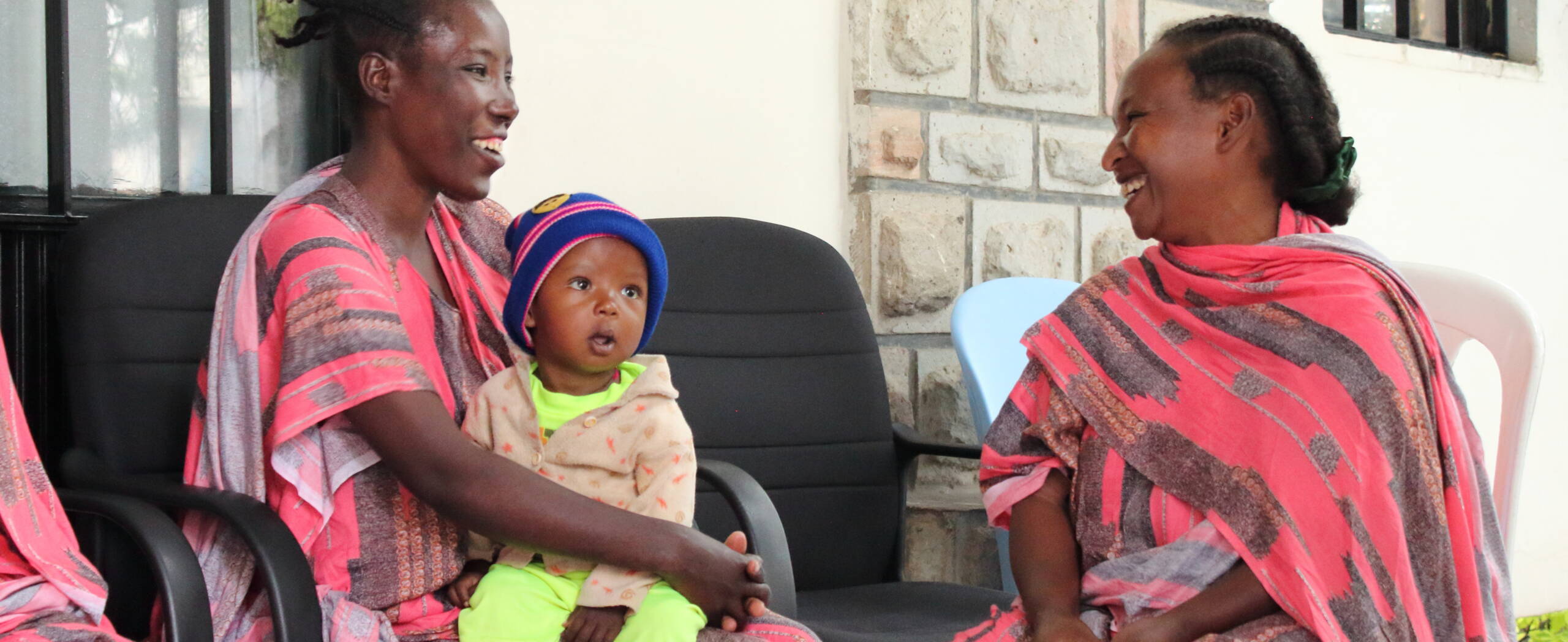
Two women are sitting opposite each other and talking.
A conversation that brings comfort: Workenesh Wolde talks to a former fistula patient.
© Selina Leu/WHI

Women who have experienced obstetric fistula themselves understand what others affected by the condition are going through. That is why we work closely with women who have recovered from obstetric fistulas in our efforts to combat the condition. Workenesh Wolde is one of them.

Published 10 February 2026

Please note: To use our resources as efficiently as possible, we used AI-based tools to support the translation of this page. Despite careful review, the translation may contain occasional errors or inaccuracies. Thank you for your understanding.

Workenesh Wolde from Ethiopia was fortunate despite her ordeal. When she gave birth to her second child, she was in labour for three days. It was the rainy season, the roads were impassable, and giving birth at home was therefore her only option.
 

Every year in Ethiopia, thousands of women develop a fistula following a complicated childbirth. This internal injury leaves them incontinent. In nine out of ten cases, the women also lose their babies. But Workenesh was fortunate: her child survived the birth.

A mother holding a small child in her arms.
Workenesh and her child, Ethiopia.
© Selina Leu/WHI

When the placenta would not be delivered, men from her village carried the young woman on a stretcher for four hours to the nearest health post – a rudimentary room with very limited medical equipment. The physical strain of the ordeal caused Workenesh to develop a fistula.

Access to Medical Care Is a Matter of Luck

The figures tell a stark story: only one in three women with an obstetric fistula in Ethiopia receives the medical care she urgently needs. This means that two out of three women are left to suffer alone – without treatment or hope.
 

Finding women affected by the condition is difficult. Many people are unaware of the symptoms of obstetric fistula, and the women themselves often live in isolation and poverty because of their incontinence and pain.

Once again, Workenesh was fortunate despite her ordeal. Doctors recognised her condition and operated on her successfully. She subsequently attended a training course and became an ambassador for obstetric fistula awareness. Today, she speaks to people in her community about obstetric fistulas and the importance of antenatal care. This helps ensure that complications are detected early and that families can set aside money in good time for treatment and travel to medical facilities.
 

Drawing on her own experience, Workenesh is able to build trust with other women. Her commitment does more than provide vital prevention work: it also helps her regain the self-confidence and social recognition she had lost along the way. Today, she says: “This work makes me happy.”

Women Who Have Recovered from Fistulas Are Driving Change

Every year in Ethiopia, more women develop obstetric fistulas following complicated childbirth than can receive treatment. The consequences are devastating: many are left living in isolation and extreme poverty. Our project takes a holistic approach to supporting women affected by obstetric fistulas while involving them in efforts to prevent new cases.

Support us!

Donate now for empowered women – protected lives

Notsituation im Bangladesch
Prekäre Lage in fdsfs für Frauen und Kinder