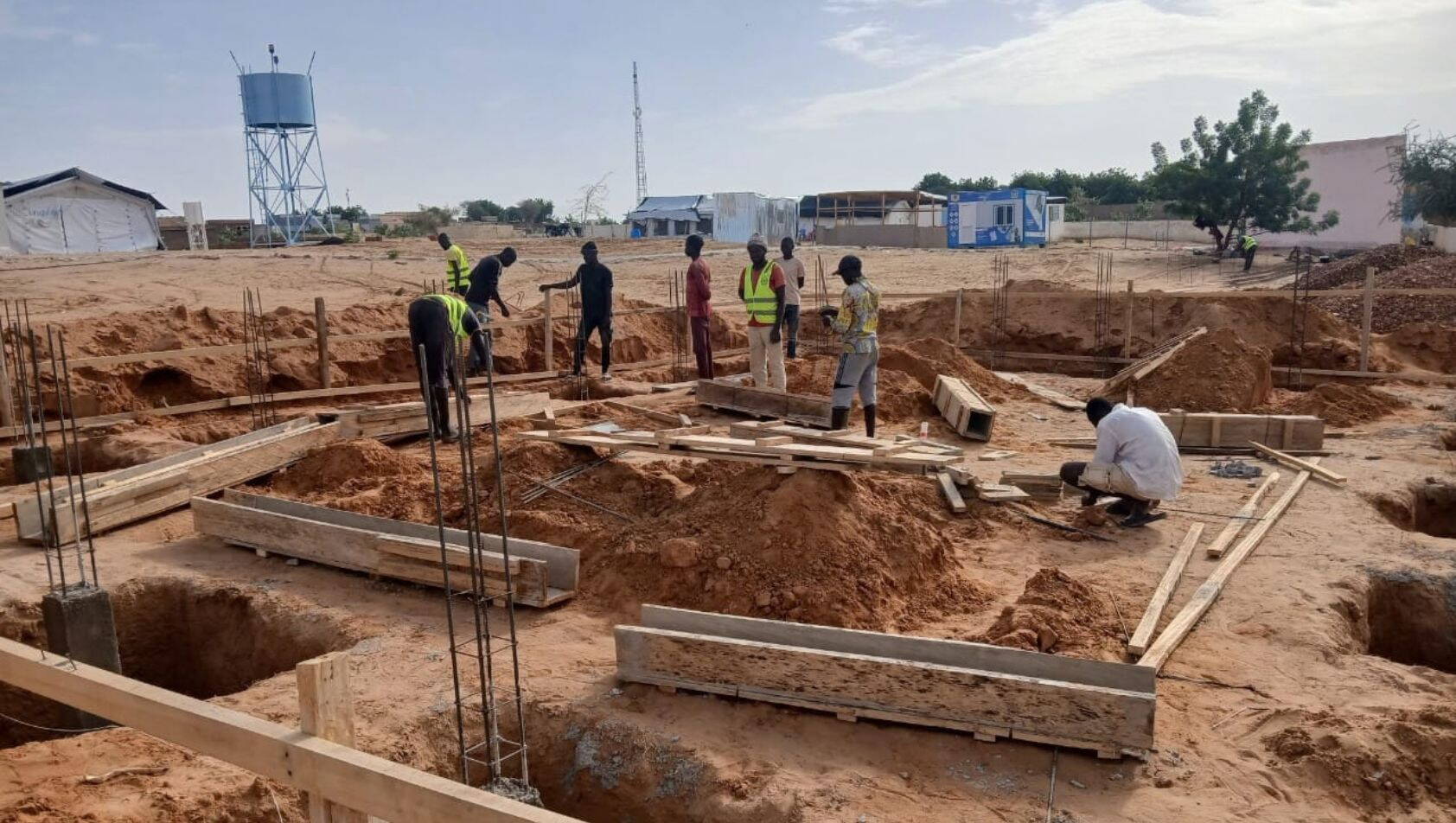
People standing around a waterpoint.
Refugees at a water point in Chad.
© Kevin Doumdedje/WHI

What can international cooperation achieve in fragile contexts – and where are its limits? Research and experience from Chad show why long-term partnerships and local partners are essential.

Published 22 October 2026

Please note: To use our resources as efficiently as possible, we used AI-based tools to support the translation of this page. Despite careful review, the translation may contain occasional errors or inaccuracies. Thank you for your understanding.

Poverty, conflict and political instability make access to healthcare more difficult and put the lives of women and children at risk. It is precisely in these situations that the impact of international cooperation is often called into question. Yet even under challenging conditions, it can make a significant difference – provided it takes a long-term approach, strengthens local structures and adapts to changing circumstances.

What works – and what doesn't?

Research, along with findings from the OECD and the World Bank, shows that international cooperation can demonstrably improve people's lives, even in fragile contexts. It is particularly effective when it addresses people's immediate needs – for example, by improving healthcare, education or food security.
 

At the same time, expectations need to be realistic. Deep-rooted political changes, such as democracy, effective state institutions or lasting peace, are difficult to bring about from the outside.
 

We take a closer look at four common myths and explore what the evidence tells us.

Myth 1: In times of crisis, emergency aid matters more than development cooperation

Humanitarian assistance is indispensable in acute crises. But even then, long-term development and strong local structures remain essential. Development cooperation must be able to respond flexibly to changing circumstances. Emergency aid and long-term cooperation complement one another: one addresses immediate needs, while the other lays the foundations for sustainable support.

Myth 2: Development funding primarily strengthens authoritarian governments

This risk exists when funding flows directly through state structures. In fragile contexts, it is therefore particularly important to carefully assess which structures are used to implement projects and what political implications the support may have. Local organisations and civil society actors are often particularly important partners for this reason.

Myth 3: International organisations should take the lead on projects on the ground

International organisations should always strengthen local partners rather than replace them. Local partners understand people's needs, have established networks and enjoy the trust of their communities. This local presence is particularly crucial in times of crisis, enabling a rapid and targeted response.

Myth 4: In times of crisis, meeting basic needs comes first – empowering women can wait

Women are often disproportionately affected by crises, but they also play a vital role in overcoming them. Education, access to healthcare and economic resources, as well as opportunities to participate in decision-making, strengthen women's ability to act – and help families and communities cope with crises more effectively.

Chad: Why emergency aid depends on long-term preparation

When war broke out in Sudan in 2023 and hundreds of thousands of people fled to neighbouring Chad, the country's already fragile healthcare system was pushed to its limits. Health facilities were overwhelmed and qualified personnel were in short supply. Refugee women and girls, in particular, had little access to medical care.
 

Women’s Hope has been working with its Chadian partner organisation BASE in the east of the country for seven years. Together, we strengthen healthcare for mothers and children. Thanks to this longstanding partnership, we were able to respond quickly and establish emergency assistance for people fleeing the conflict.

We recruited additional healthcare professionals, built a delivery ward, constructed latrines and distributed food to mothers and their families. To this day, we continue to support refugees on the ground, including by providing free medical examinations. More than 9,000 examinations have already been carried out on children under the age of five. At the same time, we are expanding healthcare infrastructure, including the construction of a much-needed operating theatre that will provide medical care to both local communities and Sudanese refugees in the future.

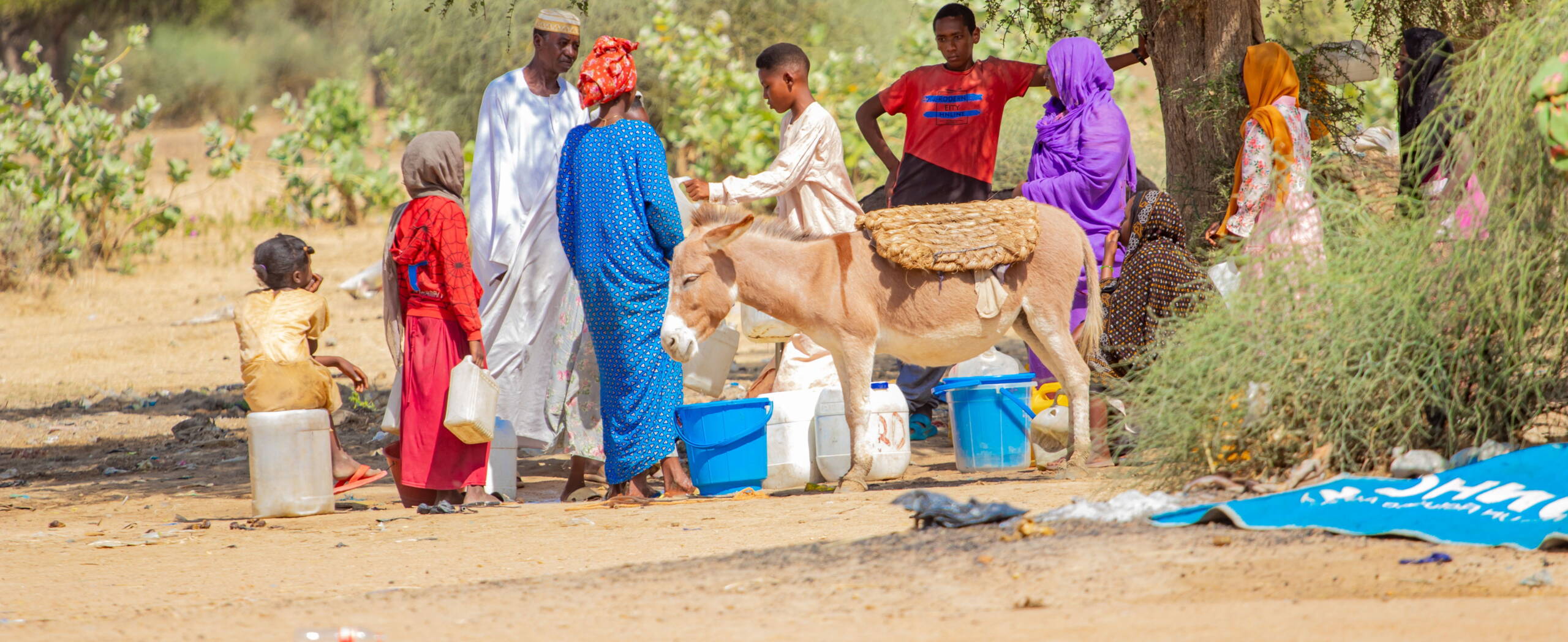
Construction site scene
Construction of a new operating theatre in Chokoyane, Chad.© BASE/WHI

The fact that assistance reaches people quickly and effectively is no coincidence. BASE understands local needs, has established networks and enjoys the trust of the community. A long-term presence and reliable relationships create the foundations for effective action, even under difficult conditions.

Think long term, act flexibly

Our experience in Chad shows why emergency aid and development cooperation should not be treated as competing priorities. In an acute crisis, immediate assistance is essential. For that assistance to be delivered effectively, the necessary structures, knowledge and relationships often need to be in place well in advance.
 

A long-term approach does not mean sticking rigidly to previously chosen strategies. It means responding to change and adapting to people's needs.

Women and children need more than assistance when a crisis erupts. They need reliable healthcare, protection and opportunities for the future – even when a crisis continues for years.
 

Notsituation im Bangladesch
Prekäre Lage in fdsfs für Frauen und Kinder