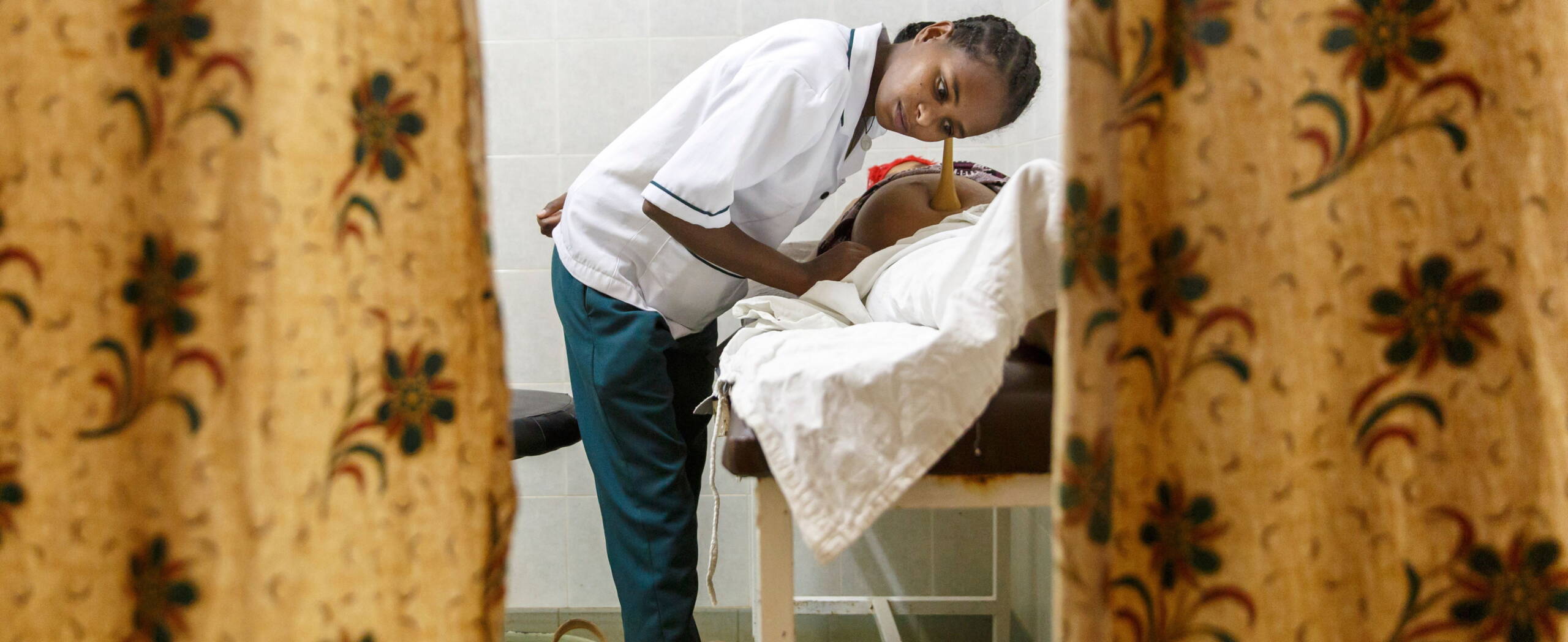
A pregnant woman undergoing a check-up at St Luke’s Hospital in Ethiopia.
Antenatal check-up, Ethiopia.
© Hanspeter Bärtschi/WHI

The international community is increasingly calling fundamental human rights into question – including the right to health. Hard-won progress is at risk of being undone as a result.

Published 13 October 2025

Please note: To use our resources as efficiently as possible, we used AI-based tools to support the translation of this page. Despite careful review, the translation may contain occasional errors or inaccuracies. Thank you for your understanding.

Human rights are not abstract legal provisions; they are a response to immeasurable suffering. They emerged in the aftermath of the world wars to protect the dignity of every individual from arbitrary state power. The Universal Declaration of Human Rights, adopted in 1948, represents a global commitment: every life matters, and everyone is entitled to freedom, security and protection.
 

As part of this commitment, states also enshrined the right to health, which was reaffirmed in 1966 in the UN International Covenant on Economic, Social and Cultural Rights. The right to health means that every person is entitled to the highest attainable standard of physical and mental health. It is intended to ensure non-discriminatory access to healthcare and the opportunity to live in a healthy environment.

Tangible progress

Although the right to health is still far from a reality for everyone, it has enabled significant progress over recent decades. Vaccination programmes have expanded, diseases such as HIV have been brought under control, survival rates for mothers and children have improved considerably, and sexual and reproductive rights have been strengthened. Many of these achievements would not have been funded and implemented on the same scale without the human rights framework.
 

We are deeply concerned to see these achievements increasingly under threat. The current global political landscape is marked by war and crises. Political leaders are calling fundamental human rights into question. Cuts to international cooperation, discriminatory legislation and attacks on medical personnel – who are protected under international humanitarian law – all demonstrate how fragile the right to health is.

A question of political will

History has taught us that when rights come under threat, women, children and marginalised groups are the first to suffer. Decisive action is therefore needed – through practical work to strengthen the health and rights of girls and women, political engagement and systemic change. Many of today’s crises are caused by human actions. Resolving them is the responsibility of political decision-makers and depends on their willingness to act – as well as that of society as a whole.

A mother with her newborn baby at St Luke’s Hospital in Ethiopia.
A mother with her newborn baby, Ethiopia.
© Hanspeter Bärtschi/WHI

Shifts in global health policy affect our work. Muriel Weyermann, our Head of International Cooperation, shares her perspective.

Muriel, you have been working in international cooperation for more than 15 years. How do you assess current developments?

The developments we are seeing are unprecedented. While the 1990s and 2000s were largely shaped by peacebuilding efforts, since the mid-2010s – and at an accelerated pace since 2022 – we have witnessed a clear return to traditional military thinking, with defence budgets rising sharply at the expense of peace missions, support for democratisation and development cooperation. This is bringing about a fundamental shift across the sector.

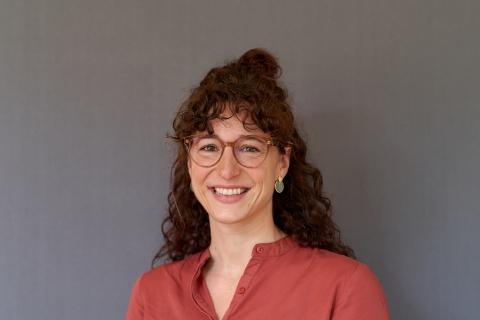
Muriel Weyerman, Head of International Cooperation, Women’s Hope.

«We are witnessing a clear return to traditional military thinking, with defence budgets rising sharply at the expense of peace missions, support for democratisation and development cooperation.»

Muriel Weyermann, Head of International Cooperation

How are the current funding cuts affecting the work of Women’s Hope?

There is a great deal of uncertainty across our sector. Thanks to our broad funding base – and especially the vital support of our loyal donors – Women’s Hope has so far been able to continue all its projects. However, some of our local partners depend on international donors who have made drastic budget cuts. In Ethiopia, for example, our partner OWDA has already had to lay off staff, and further redundancies are expected. This is destroying entire structures and leading to a loss of expertise – and, above all, people are no longer receiving the support they need.


What gives you hope?

It is not easy to remain optimistic at the moment. But we must remind ourselves that the major crises we are facing today – in Sudan, Gaza and Ukraine, for example – are caused by human actions. These are not natural disasters that leave us powerless. People have created these catastrophes – which means people can also bring them to an end.

Notsituation im Bangladesch
Prekäre Lage in fdsfs für Frauen und Kinder