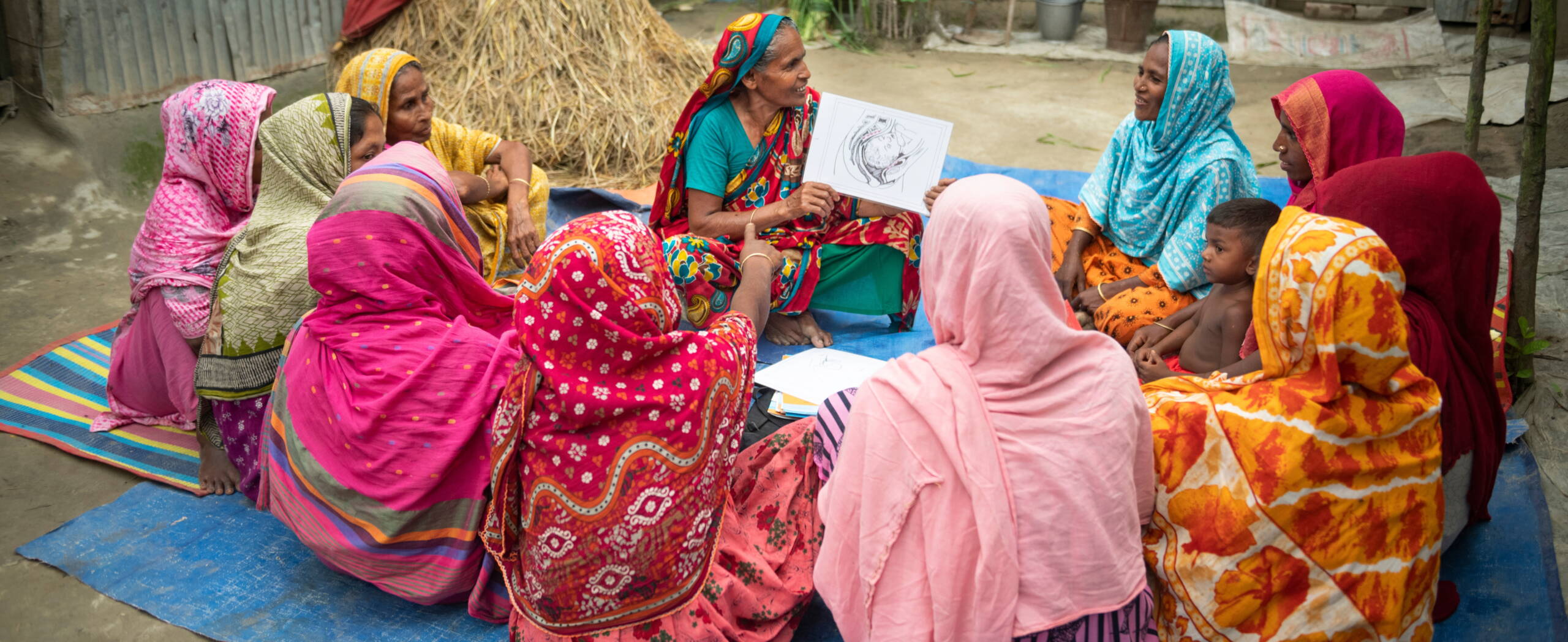
Women are sitting in a circle; one woman is talking about obstetric fistulas.
Nofisa Khatun, a former fistula patient, raises awareness about obstetric fistula.
© Farhana Akther/WHI/Fairpicture

Following a complicated birth or an unsuccessful surgery in the pelvic area, many women in Bangladesh are left with a fistula. Our project supports affected women with medical care, information and awareness-raising and opportunities to earn an income – helping them regain their dignity and independence.


Local partner

Lutheran Aid to Medicine in Bangladesh (LAMB), one of the leading healthcare providers in the project region with a strong focus on maternal and child health.


Objectives

Women living with obstetric or other fistulas receive medical care and support to reintegrate into their communities, while the number of new cases is reduced in the long term.


Activities

Raising awareness among communities, providing medical and economic support to women affected by fistula, training healthcare personnel, and expanding local healthcare provision.


Participants

Almost 38,000 people are directly involved in the project activities, with around 101,000 people reached indirectly.

Obstetric fistula is usually caused by difficult childbirth without medical care and is therefore particularly common in rural areas of Bangladesh. Young women are especially at risk because their bodies may not yet be fully developed for pregnancy and childbirth.
 

In addition to the profound loss of a child – nine out of ten women affected by fistulas lose their baby during childbirth – women suffer from distressing symptoms such as urinary or faecal incontinence. Improperly performed caesarean sections are also an increasing cause of fistula in Bangladesh.
 

Many women affected by fistula live in social isolation and poverty. In most cases, these severe injuries can be treated, but many women are unaware that treatment is available or are unable to access a clinic.

Title: Recovering from a fistula: Women in Bangladesh return to their communities with renewed strength
Local partner: Lutheran Aid to Medicine in Bangladesh (LAMB)
Project region: Rangpur and Rajshahi divisions in north-western Bangladesh
Duration: January 2025 to December 2029 (follow-up project)
Intervention areas:
Treatment of obstetric injuries / Strengthening the healthcare system
 

Our project is based in the rural regions of Rangpur and Rajshahi, with the aim of providing comprehensive support to women affected by fistulas and preventing new cases. In these areas, home births without medical assistance remain common due to a lack of alternatives.

Women in a circle
Nofisa Khatun talking to other women.
© Farhana Akther/WHI/Fairpicture

What we do

We raise awareness by training girls and young women, local healthcare workers, traditional birth attendants and other key community members on the causes of obstetric fistula and informing them about available treatment options.
 

We improve access to treatment by organising diagnostic camps in villages and providing women affected by fistula with medical treatment and psychosocial support. By providing further training to four surgeons at LAMB Hospital, we strengthen local capacity.
 

We support particularly vulnerable women by providing them with vocational training and start-up support, such as a goat or a sewing machine. Fistula survivors help identify and support other women affected by fistula in their communities.
 

We strengthen local healthcare services, particularly on a  riverine islands in Kurigram District, where poverty is widespread, by training and providing further education to healthcare professionals, recruiting additional staff and improving the infrastructure of a health centre.

Fistula survivors tell their stories

(Videos in Englisch)

Sustainability

Through our holistic approach, we not only support individual women but also contribute to lasting social change. Women who have overcome fistula become advocates, and communities recognise the importance of safe childbirth. By strengthening local structures, we help sustainably reduce the number of new birth injuries.  

Logo SDC
Logo Gebauer Foundation
Laguna Foundation
Logo Stiftung Freie Gemeinschaftsbank
Logo Lottery Funds Canton of Bern

We would like to thank all our funding partners – including those not mentioned here – for making this project possible. 

Notsituation im Bangladesch
Prekäre Lage in fdsfs für Frauen und Kinder

Hasina Begum

Hasina Begum, a former fistula patient, now visits villages to talk to people about obstetric fistula.
© Farhana Akther/WHI/Fairpicture