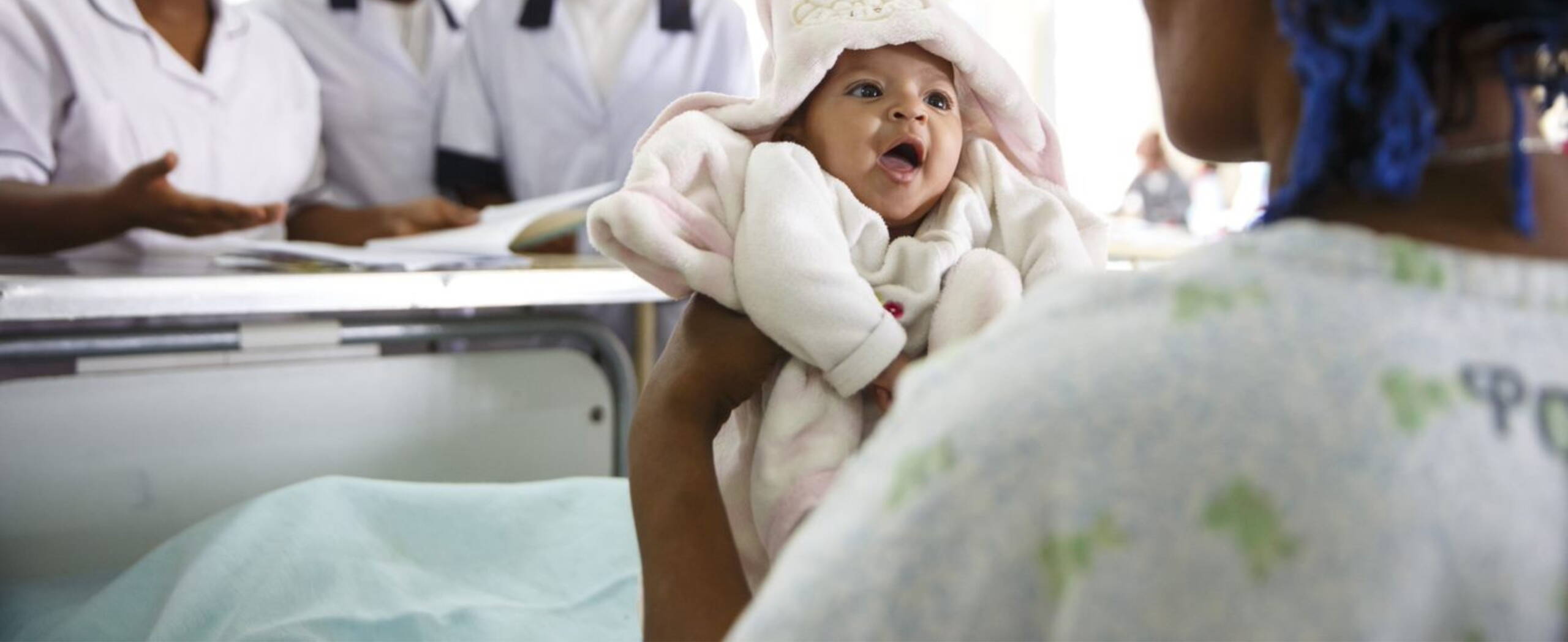
A newborn looks intently at the face of a woman who is holding it up.
Newborn at St. Luke Hospital, Ethiopia.
© Hanspeter Bärtschi/WHI

Giving birth in Ethiopia is often life-threatening – partly because there is a shortage of well-trained midwives. Our project at St. Luke Hospital provides practical training for healthcare professionals so that mothers and newborns can receive safe and respectful care. In this way, we are strengthening healthcare services in the region in a sustainable manner.


Local partner

St. Luke Hospital in Wolliso combines medical care and education. It runs its own college and a hospital specialising in maternal health.


Objectives

By sustainably strengthening the training capacity of St. Luke Hospital, the project will increase the availability of qualified healthcare professionals, particularly in maternal and newborn health.


Activities

Improving the quality of training and practical education at St. Luke Hospital and in surrounding healthcare facilities, as well as expanding the range of training programmes.


Participants

239 students are enrolled in three diploma programmes, including 119 midwifery students. More than 70 college staff members and employees of surrounding health centres are directly involved in the project as well, while around 2,200 people benefit indirectly.

Maternal and newborn mortality rates remain high in Ethiopia. Particularly in rural areas, there is a shortage of well-trained midwives and other healthcare professionals. Many healthcare facilities are also inadequately equipped, and essential medicines are often in short supply.
 

The Oromia Region, where our project is based, falls significantly short of national targets: only 44 per cent of births are attended by qualified healthcare professionals, posing significant risks to both mother and child. In addition, almost one in two women report experiencing disrespectful treatment during childbirth or postnatal care, further undermining trust in healthcare facilities.
 

This is where our project comes in: At St. Luke Hospital in Wolliso, midwives and other healthcare professionals receive practical, high-quality training. This enables them to provide competent and respectful care to mothers and newborns before, during and after childbirth, thereby strengthening healthcare services in the region in a sustainable way.

Title: Skilled midwives through high-quality training: Ensuring every birth is in safe hands
Local partner: St. Luke Hospital
Project region: Wolliso, Oromia Region, Ethiopia
Duration: February 2026 to December 2029
Intervention areas:
Strengthening the healthcare system

Women’s Hope and St. Luke Hospital have been working together on various projects since 2009 to help reduce maternal mortality in the region.

Women in medical scrubs are standing around a plastic mannequin.
Practical training at St. Luke Hospital.
© Hanspeter Bärtschi/WHI

What we do

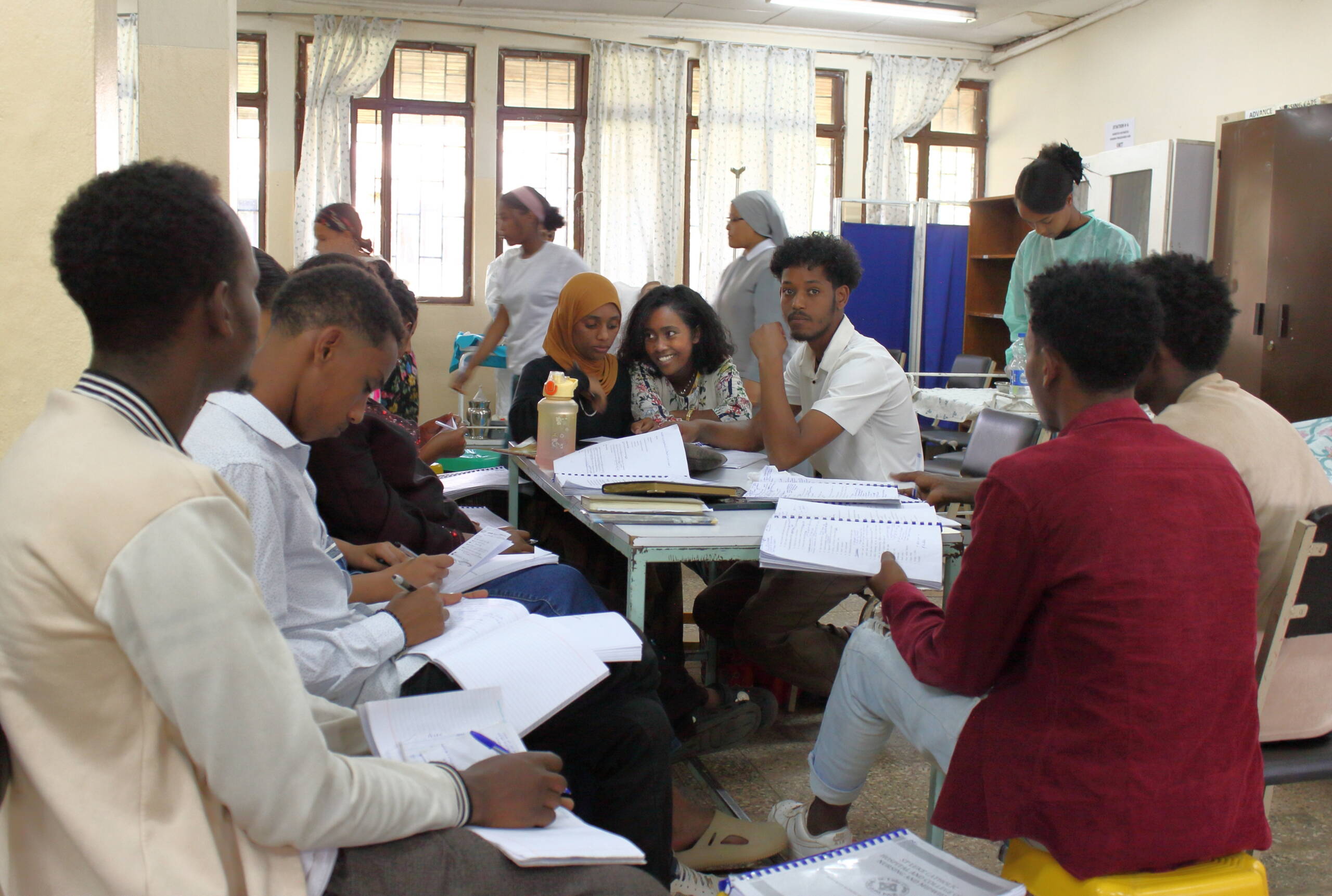
We improve the quality of the midwifery training programme at the college by recruiting qualified staff, further developing the curriculum and teaching materials, and promoting the use of digital learning formats. By covering the costs of transport, accommodation and meals, we also make the training accessible to students from low-income families.
 

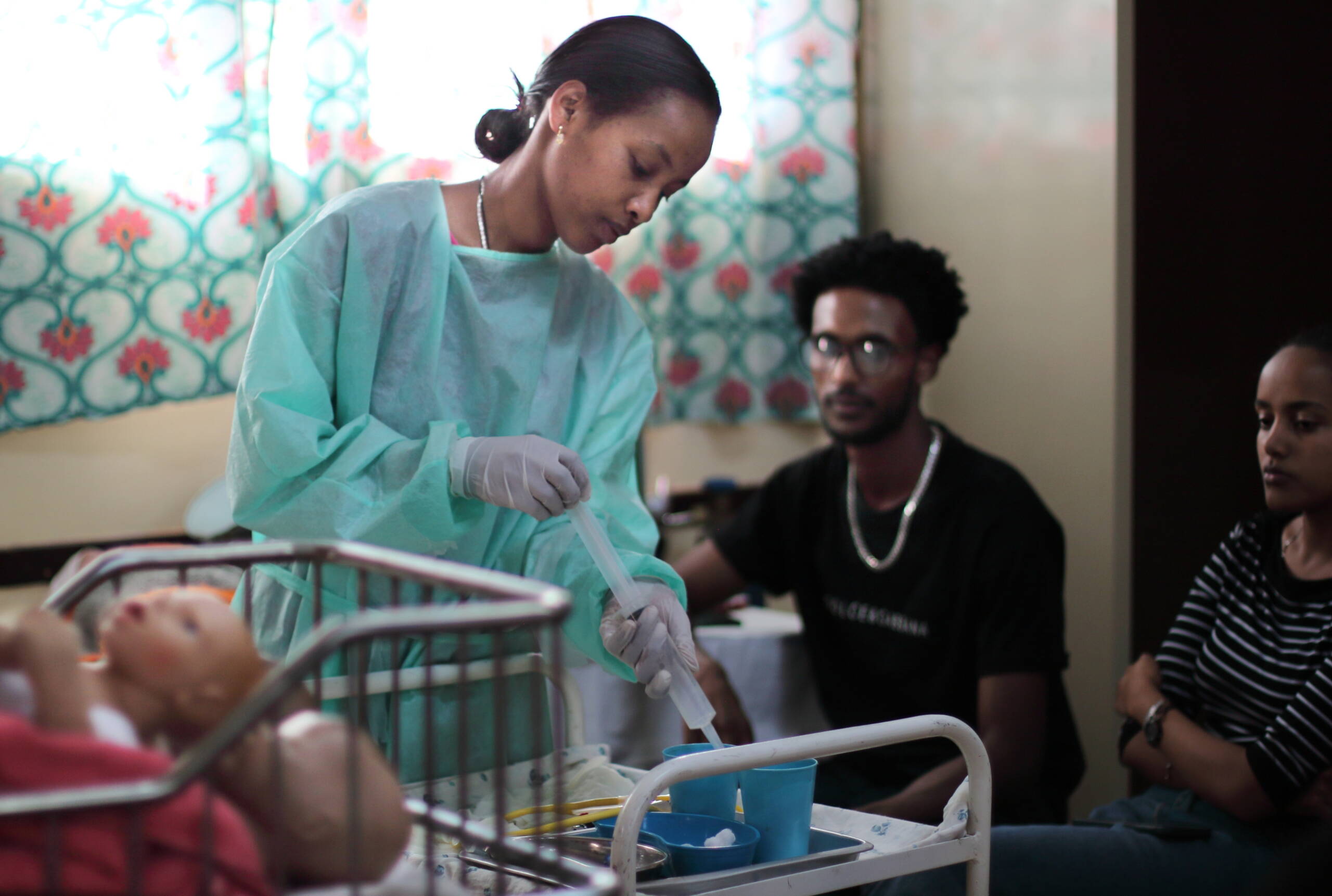
We support practical, hands-on learning by combining theoretical training blocks with practical modules. Students receive training in emergency obstetric care, newborn care, communication and other areas that go beyond midwifery. In addition, the students complete practical placements at regional health centres, where they receive close professional supervision.
 

We strengthen the college’s financial independence by expanding the midwifery programme to include two additional diploma programmes – one in laboratory technology and one in pharmacy. To this end, we provide the necessary human resources for the programmes. Finally, we are investing in the college’s kitchen facilities so that it can accommodate external guests in the future and thereby diversify its sources of income.

Sustainability

By training midwives as well as laboratory and pharmacy professionals, we are strengthening the regional healthcare system in a sustainable and comprehensive manner. The improved range of healthcare services also helps build trust in medical care among local communities. Modernised learning spaces, digital resources and trained teaching staff will ensure the quality of education in the future. Finally, diversifying the college’s sources of income increases its financial independence.

Logo SDC

We would like to thank all our funding partners – including those not mentioned here – for making this project possible. 

Notsituation im Bangladesch
Prekäre Lage in fdsfs für Frauen und Kinder

Midwifery consultation

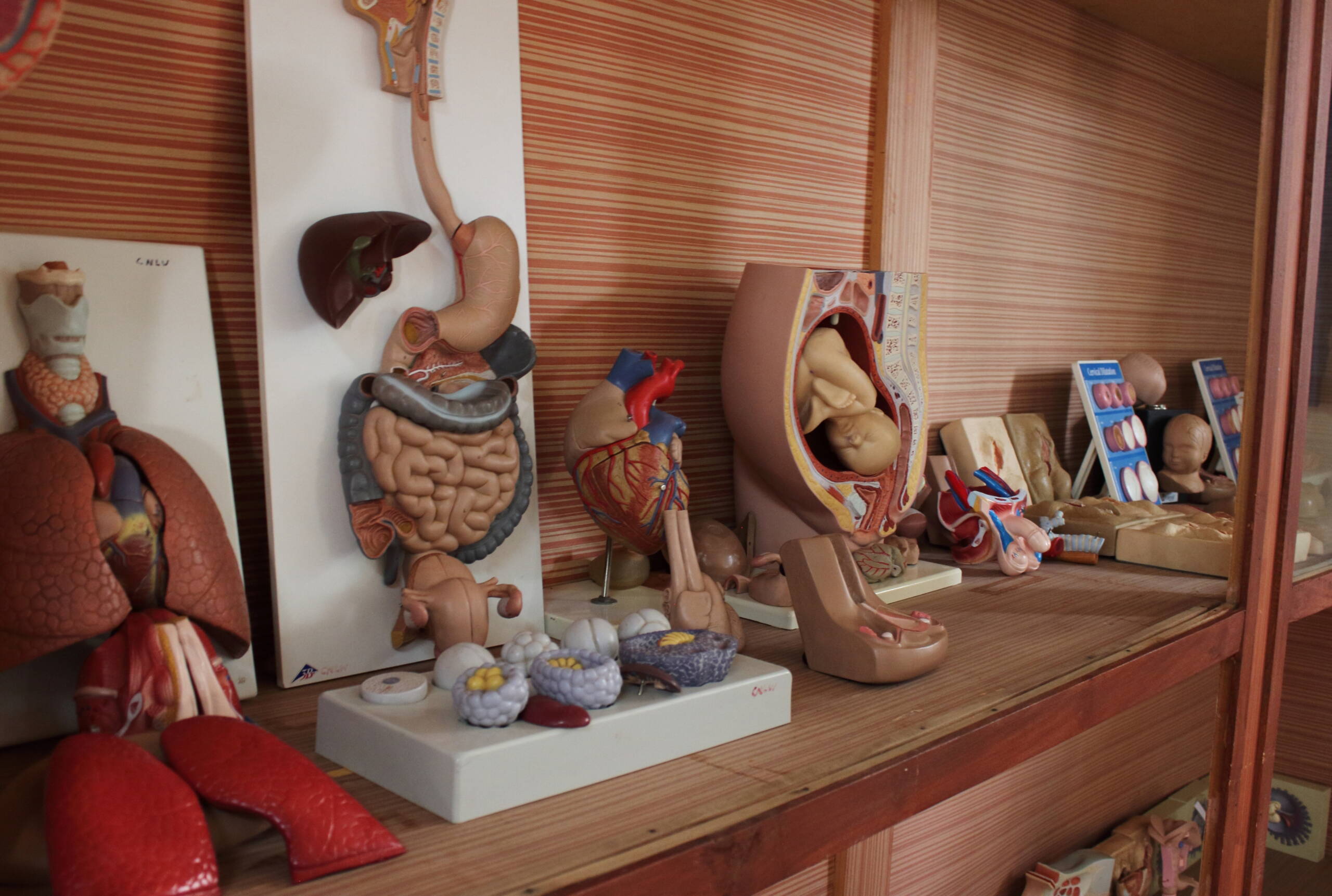
A wide range of training materials – from anatomical models to simulation equipment – supports the students’ learning.
© Selina Leu/WHI